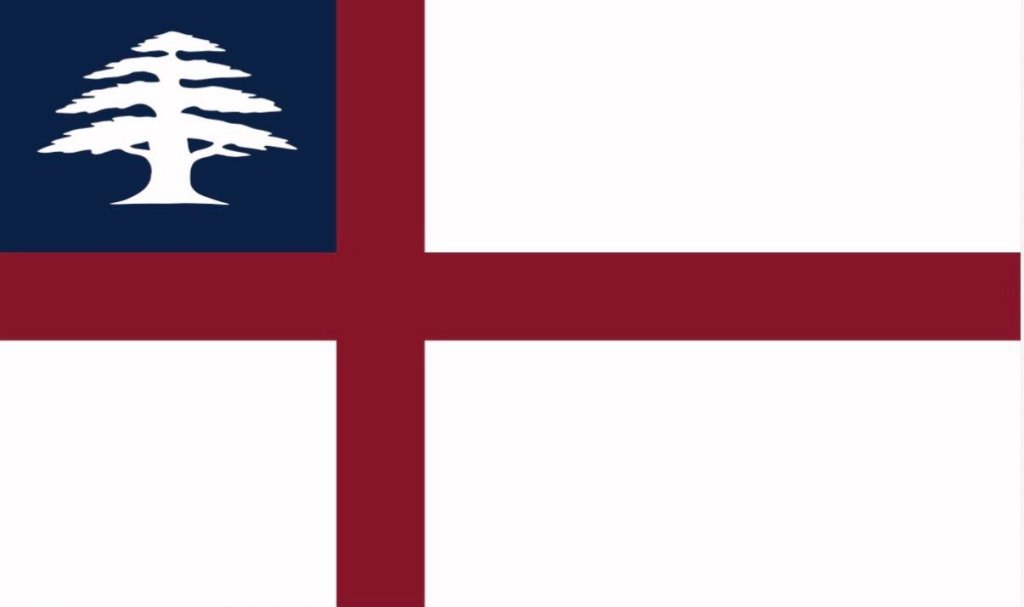
1- Introduction
The main way to understand Mount Lebanon and its Christian communities today is through confessions. Maronite, Greek Orthodox, Melkite, Armenian, Syriac, and others are seen as different “sects” living together in the same area.
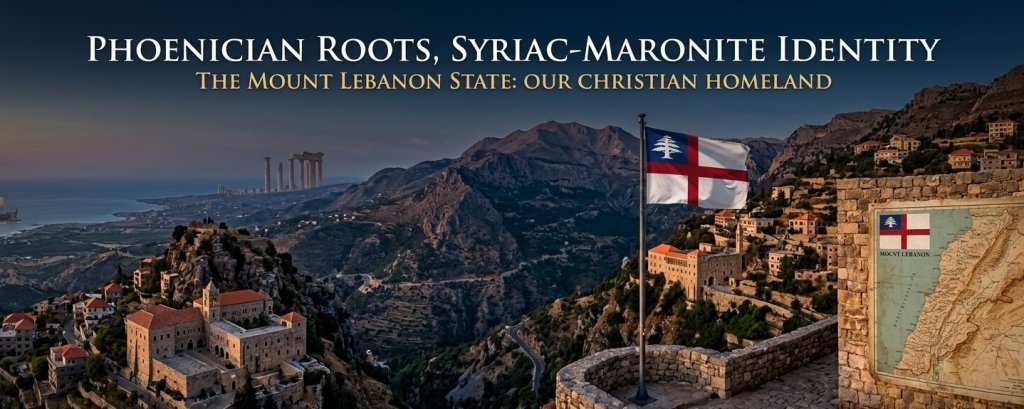
However, this view represents a modern political and administrative classification, not the historical reality of Mount Lebanon as a unified socio-political and cultural entity. This article argues that Mount Lebanon historically represented a distinct Christian nationality, referred to here as the Maronite nationality. Within this nationality, various ecclesiastical traditions coexisted. In this context, “Maronite” is viewed not as a sectarian label but as a national and civilizational description that includes all the indigenous Christian communities of the mountain.
2- Ethno-Cultural Origins of Lebanese Christians :
The Christian populations of Mount Lebanon and the Levant are native Near Eastern Mediterranean communities with cultural roots that go back before both Islam and Arab political power. Before the 7th century, these groups primarily spoke Aramaic, with Syriac serving as the main literary, liturgical, and intellectual language for Eastern Christianity. The Greek Orthodox in Lebanon, often wrongly identified as ethnically Greek, are actually Levantine Christians of Syriac-Aramaic descent. The term Rum (Romans/Byzantines) relates to their church and imperial ties with Constantinople, not their ethnic background.
The acceptance of Byzantine theology and liturgy after the Council of Chalcedon (451 CE) represented a doctrinal and ritual agreement, not an ethnic change. Likewise, the Syriac Maronites, Melkites (Greek Catholics), Syriac Orthodox and Catholics, Armenians, Assyrians, Chaldeans, and Latins reflect different ecclesiastical paths of populations that share a broadly common indigenous background within the Levantine region.
3- Arabization as a Linguistic, Not Ethnic, Process
After the Arab-Islamic conquests, Arabic slowly replaced Syriac and other local languages as the main spoken and administrative language. This change was linguistic and cultural, not ethnic. Arabization did not mean that earlier populations disappeared or turned into Arabs by descent. Similar changes took place among :
• Copts in Egypt
• Syriac Christians in Mesopotamia
• Christian communities across Greater Syria
Thus, the use of Arabic by Lebanese Christians does not prove Arab ethnicity. It instead reflects historical patterns of political control and cultural adjustment.
4- Mount Lebanon as a Historical, Political and Cultural Entity
Historically, Mount Lebanon served as:
• A defined geographical refuge
• A region of relative independence
• A space for the continuity of Eastern Christianity
Since the medieval era, Mount Lebanon developed unique political, social, and legal traditions focused on local governance, negotiated autonomy, and communal self-organization. In this environment, the Maronite Church emerged as the main institutional representative of the mountain, taking on roles that were religious, political, diplomatic, and cultural.
This role did not exclude other Christian communities. Instead, the Maronite institutional framework acted as the main structure of Mount Lebanon’s Christian society as a whole.
5- Reconsidering “Maronite” as a National Designation
In modern discussions, “Maronite” is usually viewed as just a confessional identity. Historically, however, it served as a broader marker linked to:
• Territory (Mount Lebanon)
• Political independence
• Shared historical experience
• Continuity of Christian civilization
In this light, the Maronite nationality can be seen as:
• A mountain-based Levantine Christian nationality
• Different from Arab nationalism
• Different from Western national models
• Internally diverse in ecclesiastical ties
This nationality includes all indigenous Christian communities of Mount Lebanon, such as:
• Syriac Maronites
• Greek Orthodox
• Melkite Greek Catholics
• Armenian Apostolic and Catholic communities
• Syriac Orthodox
and Catholic communities :
• Chaldeans
• Assyrians
• Latins
Their differences are confessional, not national.
6- National Identity Beyond Confessionalism
Historical national identities often included multiple rites, languages, and religious expressions. Roman, Byzantine, and later Swiss identities are good examples. Similarly, Mount Lebanon’s Christian society was never defined by sectarian division but by a shared historical journey shaped by geography, autonomy, and religious continuity.
From this viewpoint, a Greek Orthodox Christian from Koura, a Melkite from Zahle, or an Armenian from the Metn belong to the same nation. They are part of one historical national formation grounded in Mount Lebanon, the MARONITE NATION.
7- Conclusion
Mount Lebanon should not be seen as a collection of unrelated Christian sects. Instead, it is a historical Christian nation with internal diversity that is ecclesiastical rather than national.
In this context :
• “Maronite” signifies a national and civilizational identity
• Churches represent internal diversity
• Arabic shows linguistic adaptation, not ethnic origin
The idea of a Maronite nationality provides a historically based alternative to confessional and Arab-nationalist views of Lebanese Christian identity.
It restores Mount Lebanon to its rightful place as an indigenous Christian nation of the Levant, the Mount Lebanese nationality.





Leave a Reply